


For projects near the coast, selecting the right material is crucial. A common question arises: can S235J2W Corten steel, known for its weathering resistance and cold-region toughness, withstand the harsh coastal environment? The answer requires a nuanced look beyond its standard capabilities.
While S235J2W performs excellently in inland and industrial atmospheres, its performance in direct coastal salt spray environments is compromised and not recommended for critical, bare applications. The "J2" designation guarantees toughness at -20℃ but does not enhance its corrosion resistance against chlorides.
The protective mechanism of Corten steel relies on forming a stable, adherent rust layer (patina). Coastal conditions actively disrupt this process:
: Airborne salt particles (chlorides) are highly corrosive and hygroscopic. They settle on the steel, absorb moisture, and create a continuous, conductive electrolyte that promotes rapid corrosion and prevents the stable patina from forming.
: The protective patina requires alternating wet and dry periods to stabilize. In damp, salty air, surfaces remain wet for too long, leading to persistent active corrosion instead of protective passivation.
: The result is a corrosion rate that can be several times higher than in an inland environment. The rust layer may become loose, flaky, and non-protective, leading to uneven surface degradation and loss of material thickness.

If the architectural aesthetic of Corten is desired for a coastal project, its use is only viable with deliberate engineering and acceptance of higher maintenance. Success depends on managing exposure and implementing protective strategies.
1. Key Application Strategies:
: Performance improves significantly with distance from the shoreline. Use is more feasible for structures set back several hundred meters from the high-tide line, where salt deposition is lower.
Zone-Based Design: Never use bare S235J2W in the . Its use should be restricted to above these areas.
: The design must eliminate moisture traps. All surfaces should be sloped for quick water runoff, and details should allow maximum air circulation to promote drying.
2. Essential Protective Measures:
: Add significant extra thickness to the steel (e.g., 2-3 mm or more) to sacrificially corrode over the structure's design life while maintaining structural integrity.
high-performance coating system. This typically involves:
Surface preparation to Sa 2½ (near-white metal blast).
A zinc-rich epoxy primer.
Epoxy intermediate and polyurethane topcoats, with a total dry film thickness often exceeding 300 microns.
: Expect and plan for regular inspections and gentle cleaning to remove salt deposits and debris that trap moisture.
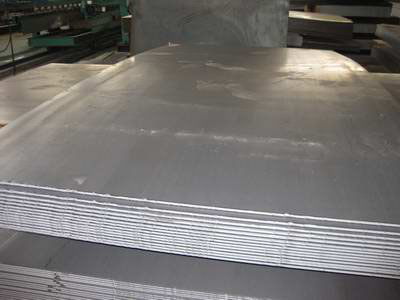
For coastal environments, the most reliable and economical approach is often to treat S235J2W as a high-quality substrate rather than a bare weathering steel.
Use the S235J2W grade for its structural properties and weldability.
from the outset.
of the steel while the coating provides predictable, long-term protection against salt.

Attempting to use it bare in a coastal spray zone will lead to accelerated corrosion, increased lifecycle costs, and potential premature failure. For critical infrastructure in these zones, hot-dip galvanizing usually offers better, more predictable performance.


